How to Make Sourdough Starter from Scratch: A No-Fuss Guide
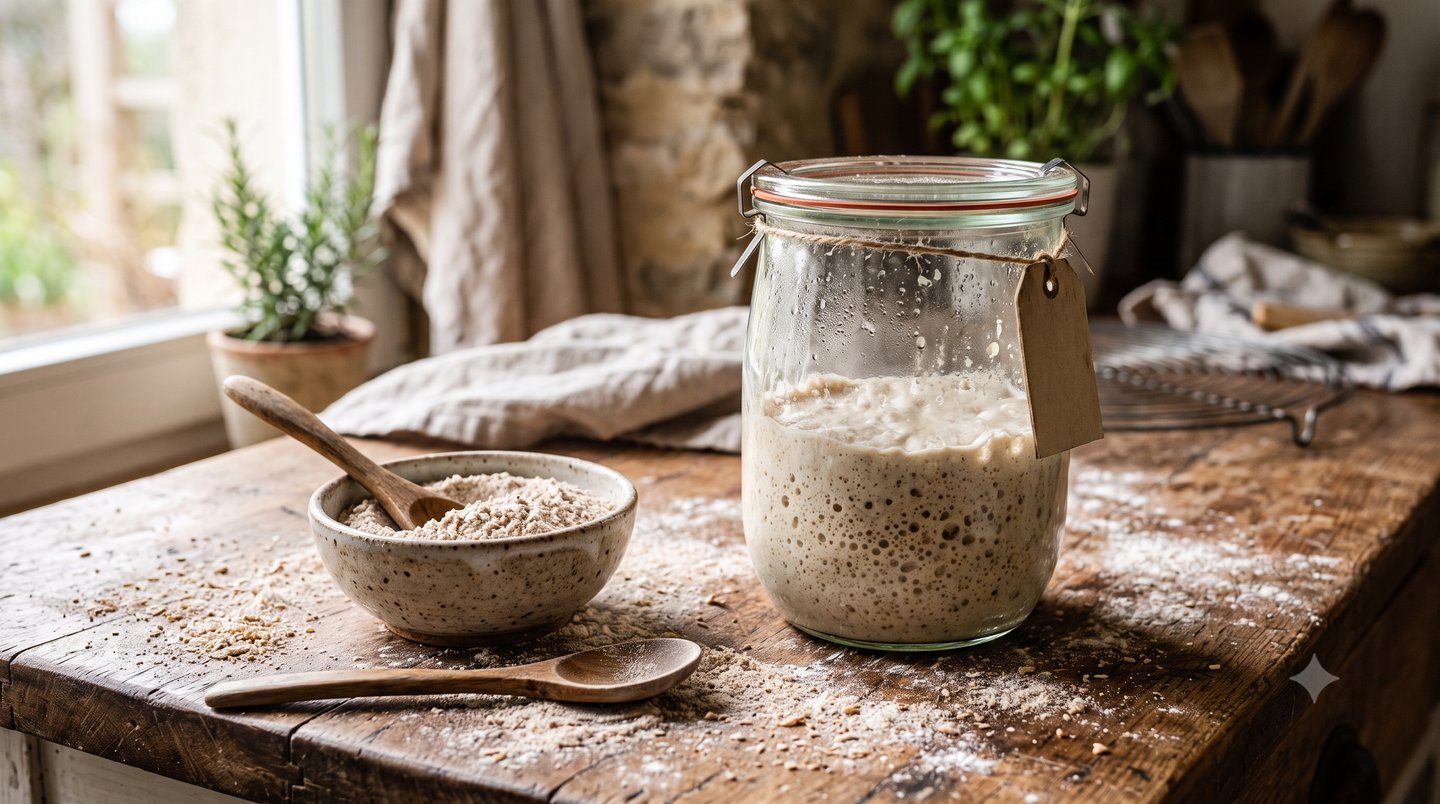
Every loaf of real sourdough begins the same way: with a jar of flour and water that somebody refused to give up on. Learning how to make sourdough starter is less a recipe than a small act of patience, five minutes a day for about a week while wild yeast and friendly bacteria move in and make themselves at home. No commercial yeast, no special equipment, no secret ingredient. Here is the whole process, along with the troubleshooting knowledge that saves most beginners from quitting on day four.
What a starter actually is
A starter is a live culture of wild yeast and lactic acid bacteria held in a paste of flour and water. The yeast produces the gas that lifts your bread, while the bacteria produce the acids that give sourdough its tang and its famously long shelf life. Both organisms are already present on the flour and in the air of your kitchen. Your only job is to feed them regularly until they form a stable community strong enough to raise a loaf.
How to make sourdough starter, day by day
Day one: mix 60 grams of whole grain flour, rye or whole wheat work beautifully, with 60 grams of lukewarm water in a clean jar. Stir until no dry spots remain, cover loosely, and leave it somewhere comfortably warm, around 21 to 24 degrees Celsius. Day two: you may see nothing, and that is normal. Stir it and walk away. Day three: small bubbles usually appear, sometimes with a surprisingly funky smell. Discard half the mixture and feed what remains with 60 grams of flour, this time half whole grain and half plain white, and 60 grams of water. Days four through seven: repeat the discard and feed routine once a day. Somewhere in this stretch the culture finds its rhythm, rising and falling predictably between feedings and smelling pleasantly of yogurt and green apples rather than gym socks.
Feeding sourdough starter without wasting flour
The discard step troubles people, but it exists for good reason: without it, you would need exponentially more flour at every feeding to keep the same food-to-organism ratio. Keep your quantities small, 60 grams is plenty, and the waste stays minimal. Discard does not have to hit the bin either. It folds happily into pancakes, crackers, banana bread and flatbreads. Once the starter is mature, you can slow the whole operation down by storing it in the fridge and feeding it weekly, waking it up with two feedings at room temperature before baking day.
Reading the signs of a healthy culture
A ready starter doubles in volume within four to eight hours of feeding, holds a dome of bubbles on top, and smells tangy but clean. The classic float test, dropping a spoonful into water to see if it floats, is a decent quick check. The timing matters more than the calendar: some kitchens produce a lively starter in five days, others need two weeks, and cooler homes are simply slower. Judge by behavior, never by the day count on the label of somebody else's tutorial.
Troubleshooting: hooch, crust and the mold question
A layer of gray liquid on top, charmingly known as hooch, just means the culture is hungry. Pour it off or stir it in and feed as usual. A dry crust means the cover is too loose. Orange or pink streaks, or anything fuzzy, mean genuine mold, and that jar should be discarded entirely rather than rescued. It happens rarely, and starting over costs only flour and a few days. Whatever you do, resist the urge to feed more often than the culture can eat; overfeeding dilutes the population you worked so hard to grow.
The language of bread
Fall down this hobby's rabbit hole and you will meet a vocabulary imported from all over Europe: levain from French, biga from Italian, and the German Anstellgut, each describing a slightly different preferment tradition. Bakers have always traded words along with techniques, and the way these terms migrated between languages mirrors how the languages themselves branched and borrowed over centuries, a story told nicely in this piece on the origin and evolution of the Germanic languages. Knowing the vocabulary is more than trivia; it unlocks recipes from bakeries far beyond your own tradition.
From jar to loaf
Once your starter passes its tests reliably, you are ready for your first bake, and the honest advice is to start with a simple recipe and expect an ugly but delicious loaf. Communities like r/Sourdough are generous with feedback on crumb photos and troubleshooting, and watching other people's failures is strangely reassuring. Name your starter, keep feeding it, and it will outlast most of your kitchen appliances. There are starters in active use today that are older than the people baking with them, which might be the most appealing thing about the whole craft.